
1. What a Cloud Kitchen Actually Is — From the Chef’s Perspective
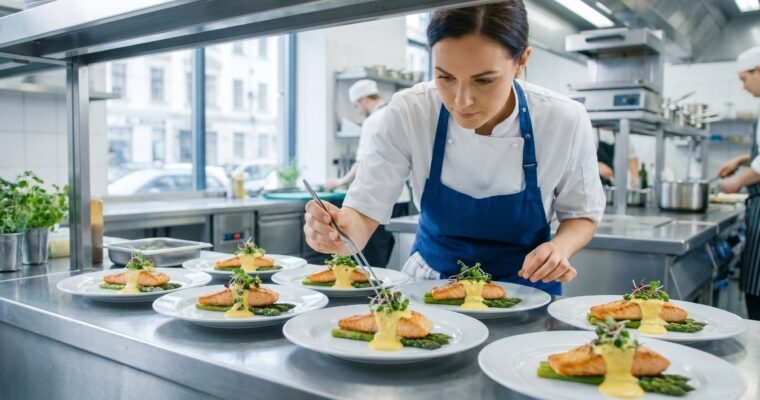
Every article about cloud kitchens in India is written for the person who wants to open one. This article is for the chef who has been offered a job in one, or is already working in one, and wants to understand what they are actually getting into. A cloud kitchen is a delivery-only kitchen. There is no dining room, no service team, no plating station for waitstaff to carry to a table. You cook, it gets packaged, it gets picked up by a Swiggy or Zomato delivery partner, and it arrives at someone’s home in 25-45 minutes. Your customers are invisible to you. You will never hear a guest say the food was good. Your feedback arrives through a rating number on an app screen. That rating — and the order volume it generates — is your primary performance metric. This is the fundamental difference between a cloud kitchen and every other kitchen environment a professional chef has worked in.
| FEATURED SNIPPET — What Is a Cloud Kitchen for a Chef?A cloud kitchen is a delivery-only kitchen — no dine-in, no service team, no guest feedback.The chef’s KPIs: Swiggy/Zomato rating (target 4.2+ to stay in active listings), preparation time (target under 15 minutes per order), and food cost percentage.The work: batch prep, KDS (Kitchen Display System) order management, packaging, and food consistency at volume.The model: one physical kitchen often runs 3-5 virtual brands simultaneously from a single prep space.The career question: cloud kitchen experience builds food cost and delivery operational skills but can atrophy fine dining technique if sustained beyond 18 months. |
2. Cloud Kitchen vs Hotel Brigade Kitchen — The 8 Key Operational Differences
Understanding the structural differences before you accept the role prevents the most common professional mistake: expecting a hotel kitchen environment and getting something entirely different.
| Operational Element | Hotel Brigade Kitchen | Cloud Kitchen | Impact on the Chef |
| Service style | Dine-in — plated dishes served to guests at tables. Real-time feedback from service team. | Delivery-only — food goes into packaging and leaves. No guest contact. Feedback arrives as app ratings 24-48 hours later. | No verbal feedback loop. Quality problems are visible only through ratings decline and order cancellations. |
| Kitchen hierarchy | Full brigade: Executive Chef, Head Chef, Sous Chef, CDP, Commis. Clear rank structure. | Typically flat: Head Chef or Kitchen In-Charge + 2-4 helpers. No formal brigade titles in most cloud kitchens. | Career rank language dissolves. A CDP at a cloud kitchen is often called “kitchen in-charge” — this matters for your CV if you stay too long. |
| Order flow | Service schedule: breakfast/lunch/dinner with defined mise en place preparation windows. | Orders arrive continuously 11am-11pm (or 24/7 in some operations). No defined service end. Order volume spikes during lunch (12-2pm) and dinner (7-10pm) peaks. | No service end = no recovery time. Prep must happen between peaks, not before a defined service start. |
| KDS (Kitchen Display System) | Most hotel kitchens use KOT slips or KDS for dine-in. Pace is managed by the maître d’ and service team. | The KDS is the entire communication system. Orders appear directly from Swiggy/Zomato. Preparation timer starts counting immediately. Missing a time target affects rating. | Speed is a hard KPI. A Galouti kebab that takes 18 minutes in a hotel is unacceptable in a cloud kitchen where the target is 12 minutes. |
| Menu scope | 20-80 items typical at hotel Indian section. Seasonal menu changes 2-4 times per year. | 15-40 items per brand. But one kitchen runs 3-5 brands = 45-200 items total from one prep space. | Breadth vs depth. Cloud kitchen rewards fast, consistent execution of a narrow menu. Fine dining depth is not the skill being used. |
| Plating and presentation | High attention to plating and visual presentation. Service team carries dishes with care. | Packaging replaces plating. Food must survive a 25-45 minute delivery journey in a delivery bag at ambient temperature. | Plating skill is not practiced. Packaging decision-making (which container, which seal method) becomes a core skill. |
| Food cost accountability | CDP tracks section food cost. Hotel has a formal food cost reporting structure. | Cloud kitchen food cost must account for aggregator commission (15-30% to Swiggy/Zomato). Effective food cost target is typically 25-32% vs hotel’s 28-35%. | Food cost discipline is tighter in cloud kitchens — aggregator commission compresses margins significantly. |
| Customer feedback | Guest speaks to service team. Complaints handled same evening. | Ratings and reviews visible on app. Negative reviews affect algorithmic ranking. Complaints via app support — resolution takes 24-72 hours. | Rating management is a chef responsibility that does not exist in hotel brigade work. A 3-star review about cold food is a packaging or delivery time problem, not purely a cooking problem. |
3. What a Cloud Kitchen Chef Actually Does — Daily Role and Responsibilities
Here is the honest breakdown of a cloud kitchen chef’s actual daily work. This is not what the job listing says — it is what the role involves on the ground.
| Time of Day | Activity | What This Means in Practice |
| 9:00 AM — 11:00 AM (Pre-peak prep) | Batch cooking of gravy bases, marination of proteins, prep of high-demand items, kitchen setup. | This is the most important 2 hours. Everything that takes more than 10 minutes to make must be batch-prepped. Running out of gravy base at 1 PM during lunch peak = order cancellations = rating drop. |
| 11:00 AM — 2:00 PM (Lunch peak) | Full order execution from KDS. Packaging, labelling, handover to delivery partners. | Peak stress period. KDS shows orders from multiple brands simultaneously. Each order has a countdown timer. Missing the timer = delayed delivery = 3-star rating. Speed and accuracy must happen together. |
| 2:00 PM — 5:00 PM (Inter-peak) | Replenish batch preps, kitchen cleaning, inventory check, packaging restock, recipe quality check. | The only recovery window. Use it entirely for the next peak preparation. Chefs who rest during inter-peak run out of prep during dinner peak. |
| 5:00 PM — 10:00 PM (Dinner peak) | Second and larger order peak. Biryani, rolls, and family meal items dominate Swiggy/Zomato dinner orders in India. | Dinner peak is typically 40-60% higher order volume than lunch. The kitchen must be fully restocked by 5 PM or the peak becomes unmanageable. |
| 10:00 PM — close | Kitchen breakdown, deep cleaning, inventory reconciliation, waste recording, next-day prep list. | Food cost reconciliation happens here — recording wastage, unused portions, and ordering for the next day. This is where the chef’s food cost accountability is built or lost. |
★ The most common failure mode for chefs transitioning from hotel to cloud kitchen: treating inter-peak time as rest time. Hotel kitchens have structured pre-service prep windows. Cloud kitchens do not — the inter-peak IS the prep window. Batch prep runs out during dinner peak if the inter-peak is not used correctly.
4. Swiggy and Zomato Ratings as Kitchen KPIs — What Drives Them
In a cloud kitchen, the Swiggy and Zomato rating is the closest equivalent to the hotel GM’s monthly food review. It determines your brand’s visibility in the app algorithm and directly affects order volume. Understanding what drives it is a core cloud kitchen chef skill.
| Rating Driver | What Affects It | Chef’s Control Level | Practical Action |
| Food taste and quality | Customer reviews mentioning taste, spice level, freshness, portion size. | HIGH | Standardise recipes with measured spice quantities. Taste every batch before peak. Consistency is rated higher than occasional excellence. |
| Preparation time | Time from order received to food handed to delivery partner. Zomato and Swiggy track this. | HIGH | KDS preparation time target: 10-15 minutes per order for most dishes. Longer prep = delayed delivery = negative review. Batch prep is the solution. |
| Packaging quality | Whether food arrives intact, non-spilled, at right temperature. Most common complaint category. | HIGH — packaging decisions are the chef’s | Use leak-proof containers for gravies. Biryanis need ventilated foil containers (prevents sogginess). Dry items (rolls, wraps) need paper-lined boxes with absorption sheets. |
| Portion accuracy | Whether the delivered portion matches the menu description and price point. | HIGH | Standardise portions using portion scoops, ladles, and weighing scales. A ‘half-portion complaint’ on Zomato is a portioning failure, not a delivery failure. |
| Delivery time (last-mile) | Time from food handover to customer. Determined by delivery partner routing. | LOW — outside chef control | Chefs cannot control last-mile. But they can control prep time so food does not sit waiting for the delivery partner. |
| Item availability | Whether ordered items are marked available when they are actually out of stock. | MEDIUM — kitchen team responsibility | Mark items unavailable on POS/KDS the moment prep runs out. Unfulfilled orders or item substitutions are the fastest path to 1-star reviews. |
| TARGET RATING BENCHMARKS — SWIGGY AND ZOMATO INDIA4.5+ Rating: Top listing placement. Maximum algorithm visibility. High repeat order rate.4.2 – 4.4 Rating: Acceptable — standard listing placement. Maintain with consistent quality.3.9 – 4.1 Rating: Warning zone — algorithm reduces visibility. Order volume drops 15-30%.Below 3.8 Rating: Critical — Swiggy/Zomato may delist or reduce delivery zone coverage. A single viral negative review can drop a rating from 4.3 to 3.9 in 48 hours.Recovery requires 40-50 consecutive positive reviews. Prevention is far easier than recovery. |
5. Delivery-Friendly Menu Design — The Chef’s Responsibility
In a hotel kitchen, the menu is designed by the Executive Chef and a Food & Beverage committee. In most cloud kitchens, the head chef or kitchen in-charge designs the menu — or inherits one without knowing why certain dishes were chosen. Understanding what makes a dish delivery-friendly is a core cloud kitchen chef skill that is not taught anywhere.
| Dish Category | Delivery-Friendly? | Why / Why Not | Professional Adaptation |
| Biryani (any variety) | ✅ EXCELLENT | Self-contained, aromatic, holds temperature well, high perceived value per order, packaging-friendly. | Use ventilated foil containers — prevents steam sogginess. Add raita in separate sealed cup. Biryani is India’s top-selling cloud kitchen item on both Swiggy and Zomato. |
| Curries and gravies with rice/roti | ✅ GOOD | Holds well for 25-35 min delivery window. Separate packaging for rice/roti prevents sogginess. | Always package gravy and starch separately — never pre-combined in delivery packaging. Roti goes in foil-lined bag, not sealed plastic (sweating = soggy roti). |
| Rolls and wraps | ✅ GOOD | Self-contained, portable, fast to assemble. | Double-wrap in butter paper then foil. Hot rolls in sealed plastic = steam-soggy interior in 15 minutes. |
| Fried items (momos, samosa, pakoda) | ⚠️ CONDITIONAL | Excellent in-kitchen, poor beyond 20 minutes delivery window. | Only viable in delivery zones under 3 km. Add ventilation holes to packaging. Clearly mark ‘crispy items — consume immediately’ in order notes. |
| Thick gravies / dry preparations (varuval, tawa items) | ✅ GOOD | Dry-ish preparations hold texture better than thin gravies during delivery. | Use wide shallow containers — better heat distribution during delivery. Avoid stacking with wet items. |
| Thin soupy gravies (rasam, thin dal) | ❌ POOR | Spills in transit. Degrades quickly. Difficult to package reliably. | Replace with thicker versions in cloud kitchen menu. Thin dal = packaging failure risk. Thick dal makhani = excellent delivery item. |
| Fresh salads / cold items | ❌ POOR | Temperature control unreliable in delivery. Wilt within 20 minutes. | Avoid unless running a premium health-focused brand with insulated delivery packaging. |
| Tandoor items (naan, tandoori chicken) | ⚠️ CONDITIONAL | Naan goes rubbery after 15 minutes. Tandoori chicken holds better. | Package naan in ventilated foil — never sealed plastic. Mark as ‘best consumed immediately’. Consider offering paratha instead for long delivery zones. |
★ The single most important menu design rule for cloud kitchens: if a dish cannot survive a 30-minute delivery in a delivery bag without significant quality degradation, it should not be on the menu. Chefs who insist on including technically difficult delivery items are creating their own low ratings.
6. Multi-Brand Kitchen Management — Running 3-5 Menus from One Space
Most cloud kitchens in India operate multiple virtual brands from a single physical kitchen. Rebel Foods runs 11 brands from some of their kitchens. Even a small independent cloud kitchen typically runs 2-4 brands. Managing this as a chef requires a completely different operational mindset from a hotel Indian section.
| Challenge | What It Means for the Chef | How to Manage It |
| Shared ingredient management | Multiple brands use the same base ingredients (onion-tomato base, ginger-garlic paste, marinated proteins) — but each brand has different portion standards and preparation specifications. | Maintain a single production batch for shared ingredients. Label clearly which brand each portion belongs to. Never cross-contaminate brand portions — incorrect branding on a delivery creates customer confusion and review fragmentation. |
| Simultaneous KDS orders | KDS shows orders from all 5 brands simultaneously. A Biryani By Kilo order and a momos order and a North Indian curry order may appear within 30 seconds of each other. | Colour-code KDS screens by brand if the system allows. Train your team on brand-specific assembly — a helper who assembles the wrong brand’s packaging for a dish is a rating disaster. |
| Brand identity separation | Each brand must feel distinct to the customer even though they come from the same kitchen. Packaging, labelling, and portioning must be brand-accurate. | Use brand-specific packaging materials — different boxes, different labels, different portion sizes per brand even for identical base dishes. This is not optional — it is the core of multi-brand operation. |
| Menu timing across brands | Different brands have different peak hours. A breakfast brand peaks 8-10am. A biryani brand peaks 12-2pm and 7-9pm. A snack brand peaks 4-6pm. | Design prep schedules around each brand’s peak, not a single combined peak. This is the primary operational advantage of multi-brand: distributed demand across the day reduces kitchen stress. |
| Performance accountability | Each brand has its own Swiggy/Zomato rating. A poor rating on one brand does not affect another brand’s listing — but both come from the same kitchen. | Track each brand’s rating separately. A consistently low-rated brand is a menu or packaging problem. Identify it per brand, not as a kitchen-wide failure. |
7. Food Cost in a Cloud Kitchen — How It Differs from Hotel Context
Food cost management in a cloud kitchen operates under a different set of constraints than a hotel kitchen. The aggregator commission fundamentally changes the margin structure.
| CLOUD KITCHEN FOOD COST REALITY — MARGIN STRUCTUREREVENUE SPLIT (per Rs.300 order on Swiggy/Zomato): Aggregator commission (15-30%): Rs.45 – Rs.90 deducted Net revenue to kitchen: Rs.210 – Rs.255 Food cost target (30% of net): Rs.63 – Rs.76 Packaging cost (4-6% of net): Rs.8 – Rs.15 Effective margin before staff/rent/utilities: Rs.131 – Rs.176 per order CONTRAST WITH HOTEL KITCHEN: Hotel Indian section: no aggregator commission. Food cost target 28-35% of menu price. Cloud kitchen: effective food cost must be tighter (25-30%) to compensate for aggregator margin loss. KEY IMPLICATION FOR CHEFS: A dish that costs Rs.120 to produce and sells for Rs.350 in a hotel = acceptable food cost (34%) The same dish in a cloud kitchen at Rs.350 – Rs.75 aggregator commission = Rs.275 net. Food cost = 43% of net. UNVIABLE. Cloud kitchen menu prices must be 20-25% higher than equivalent hotel prices, OR food cost must be lower. |
★ The food cost discipline learned in cloud kitchens is directly transferable to hotel career advancement — with the caveat that you understand the aggregator commission context when translating the numbers. A cloud kitchen food cost of 30% (of gross) looks worse than a hotel food cost of 32% (of net) — but is actually better margin once aggregator commission is removed.
★ Full chef salary and food cost context by property type
8. Cloud Kitchen Chef Salary in India — By Rank and City Tier
Cloud kitchen chef salaries in India in 2026 are lower than equivalent hotel brigade salaries at most properties — but they are converging as the industry matures. Here is the honest comparison.
| Role | Cloud Kitchen Monthly (Metro) | Cloud Kitchen Monthly (Tier 2) | Hotel Equivalent Monthly (Metro) | Honest Assessment |
| Kitchen Helper / Commis equivalent | Rs.10,000 – Rs.16,000 | Rs.7,000 – Rs.12,000 | Rs.13,000 – Rs.20,000 | 15-25% lower than hotel Commis. Offset by: no dress code enforcement, more flexible hours at some cloud kitchens, faster responsibility assignment. |
| CDP / Kitchen In-Charge | Rs.18,000 – Rs.30,000 | Rs.13,000 – Rs.22,000 | Rs.22,000 – Rs.42,000 | 20-30% lower than hotel CDP at most cloud kitchens. Exception: well-funded cloud kitchen brands (Rebel Foods, Curefoods) pay Rs.25,000 – Rs.35,000 at CDP-equivalent level — approaching hotel ranges. |
| Head Chef (single brand) | Rs.28,000 – Rs.45,000 | Rs.20,000 – Rs.32,000 | Rs.55,000 – Rs.85,000 (Sous Chef) | Significant gap at senior level. Cloud kitchen Head Chef earns considerably less than hotel Sous Chef. The title is not equivalent. |
| Head Chef (multi-brand, 3-5 brands) | Rs.35,000 – Rs.55,000 | Rs.25,000 – Rs.40,000 | Rs.55,000 – Rs.85,000 (Sous Chef) | Multi-brand head chef role closes some gap. Requires strong operational skills. The salary differential vs hotel Sous Chef narrows from 40% to 20-25%. |
| No service charge in cloud kitchens | — | — | Rs.8,000 – Rs.22,000/month additional at 5-star hotel | Cloud kitchens do not have service charge distribution. Total compensation gap is wider than base salary figures suggest. |
★ Full hotel brigade salary by rank for comparison
9. The Career Question — Does Cloud Kitchen Experience Help or Hurt Your Hotel Path?
This is the question every chef should ask before accepting a cloud kitchen role and almost nobody answers honestly. The answer depends entirely on duration and how you use the experience.
| Scenario | Career Impact | Why | Recommendation |
| 6-12 months cloud kitchen, then hotel application | ✅ POSITIVE | Demonstrates food cost discipline, delivery volume management, KDS operations, and multi-brand management. These are genuine skills hotel HR values at CDP level in 2026. | Use it. A focused 12-month cloud kitchen stint builds a strong food cost data line for your hotel CV. Mark it clearly as a strategic operational role. |
| 12-18 months cloud kitchen, then hotel application | ✅ POSITIVE with caveats | Same benefits as above. Fine dining technique begins to atrophy slightly but is recoverable within 1-2 months back in a hotel brigade. | Still viable. Refresh fine dining plating and brigade discipline quickly after returning to hotel. Consider a weekend or holiday stint at a hotel kitchen during cloud kitchen employment. |
| 2-3 years cloud kitchen, then hotel application | ⚠️ YELLOW — manageable | Brigade language weakens. Fine dining technique atrophies significantly. Hotel HR at premium properties may view extended cloud kitchen career as a red flag for fine dining sensitivity. | Manageable with the right framing. Present cloud kitchen years as operational leadership, not cooking. Prepare for a food trial that tests fine dining technique you have not practiced in 2+ years. |
| 3+ years cloud kitchen only, then hotel application | 🔴 DIFFICULT — requires active rehabilitation | The rhythm of delivery cooking (speed, consistency, batch) is fundamentally different from hotel fine dining (precision, plating, brigade discipline). 3+ years embeds delivery patterns that take significant effort to unlearn. | Do not let this happen passively. After 18 months in cloud kitchen, either move back to hotel or actively practice hotel technique on your off days. Time is working against you. |
| Cloud kitchen experience strategically built on CV | ✅ STRONG | Food cost data from cloud kitchen (aggregator commission context) + operational leadership of multi-brand kitchen is a genuine differentiator from hotel-only chefs at CDP/Sous Chef level. | Frame cloud kitchen on your resume as: “Kitchen In-Charge — 3 virtual brands, maintained 4.4 Swiggy rating, food cost 28% of net revenue.” This reads as operational maturity, not a gap. |
★ Career path guide — where cloud kitchen fits in the progression
★ How to present cloud kitchen experience on your hotel kitchen CV
10. Frequently Asked Questions
What is a cloud kitchen and how does it differ from a hotel kitchen?
A cloud kitchen is a delivery-only kitchen — no dine-in, no service team, no plating for a dining room. Your customers order through Swiggy or Zomato, food goes into packaging, a delivery partner picks it up. Your primary performance metric is your app rating (target 4.2+) and preparation time (target under 15 minutes). The key operational differences from hotel brigade kitchen work: flat hierarchy (no full brigade structure), continuous order flow through a KDS instead of defined service periods, packaging replaces plating, and food cost must account for 15-30% aggregator commission reducing effective margins. One cloud kitchen typically runs 3-5 virtual brands simultaneously from a single prep space.
What are the roles of a chef in a cloud kitchen?
The cloud kitchen chef is responsible for five areas that differ significantly from hotel brigade work. Batch prep: cooking gravy bases, marinating proteins, and preparing high-demand items before each service peak (11am-2pm and 7-10pm). KDS management: executing orders within preparation time targets from a Kitchen Display System that shows orders from multiple brands simultaneously. Packaging: deciding and executing the packaging method for each dish — packaging quality directly affects Swiggy/Zomato ratings. Food cost: recording waste, portioning accurately, and managing ingredient quantities to hit a tighter food cost target (25-30%) than hotel kitchens due to aggregator commission. Kitchen compliance: maintaining FSSAI standards in a no-guest-facing kitchen environment.
What is the salary of a chef in a cloud kitchen in India?
Cloud kitchen chef salaries in 2026 range from Rs.10,000–Rs.16,000 per month for entry-level roles (Commis equivalent) in metro cities, Rs.18,000–Rs.30,000 for CDP-equivalent (Kitchen In-Charge), and Rs.28,000–Rs.55,000 for head chef roles depending on the number of brands managed. These figures are 15-30% lower than equivalent hotel brigade roles at most properties. The important caveat: cloud kitchens do not have service charge distribution — which adds Rs.8,000–Rs.22,000 per month at 5-star hotel properties. The total compensation gap between cloud kitchen and hotel kitchen is wider than base salary alone suggests. Well-funded cloud kitchen brands (Rebel Foods, Curefoods) pay at the upper end of these ranges.
What cuisines work best in cloud kitchens in India?
Data from Swiggy and Zomato consistently shows five cuisine categories dominating cloud kitchen order volumes in India: biryani (the single largest category — accounts for 25-30% of all food delivery orders nationally), rolls and wraps (portable, fast assembly, lower food cost), North Indian curries with roti or rice, momos and dumplings (particularly in North and Northeast India cities), and Chinese-Indian (Hakka noodles, Manchurian, fried rice — high order frequency, low prep time). Cuisines that perform poorly for delivery: fine dining, fresh salads, crispy fried items in long delivery zones, and thin soupy preparations. The most profitable cloud kitchen menus in India in 2026 are biryani-led with a secondary category of rolls or momos.
Does cloud kitchen experience hurt a hotel kitchen career?
Honest answer: it depends on duration and framing. 6-18 months of cloud kitchen experience is a career positive — it builds food cost discipline, delivery operational skills, and multi-brand management that hotel CDP roles increasingly value. Beyond 18 months, fine dining technique begins to atrophy and brigade language weakens, which creates friction when applying to premium hotel properties. Beyond 3 years, the gap requires active rehabilitation. The strategic use: treat cloud kitchen as a 12-18 month operational skills rotation, build strong food cost data for your CV, then return to hotel at CDP or Sous Chef level with a stronger operational profile than a hotel-only candidate. How to return to hotel kitchen after cloud kitchen
What are the best practices for cloud kitchen operations from a chef’s perspective?
Six practices that separate high-performing cloud kitchen chefs from average ones. First: batch prep religiously — everything that takes more than 10 minutes must be pre-made before each peak. Second: taste every batch before service — consistency is rated higher than occasional excellence. Third: track your rating daily — a downward trend needs an immediate root cause analysis before it compounds. Fourth: standardise portions with equipment (scoops, ladles, scales) — not by eye. Fifth: mark items unavailable the moment prep runs out — an unfulfilled order is worse than a missing menu item. Sixth: use inter-peak time entirely for prep — there is no equivalent of a hotel kitchen’s pre-service window.
What FSSAI compliance does a cloud kitchen chef need to know?
Cloud kitchens require FSSAI registration (basic registration for annual turnover under Rs.12 lakh, state license for Rs.12 lakh to Rs.20 crore). The no-dine-in format does not reduce FSSAI compliance requirements — FSSAI inspectors treat cloud kitchens identically to commercial restaurant kitchens. Key requirements: FoSTaC-trained food safety supervisor (at least one per kitchen — mandatory for FSSAI state license), valid food handler medical certificates for all staff, documented HACCP or food safety management system, and pest control records. The FoSTaC Basic certificate is the minimum for a cloud kitchen chef. FoSTaC Advanced is recommended for the head chef.

Leave a Reply