
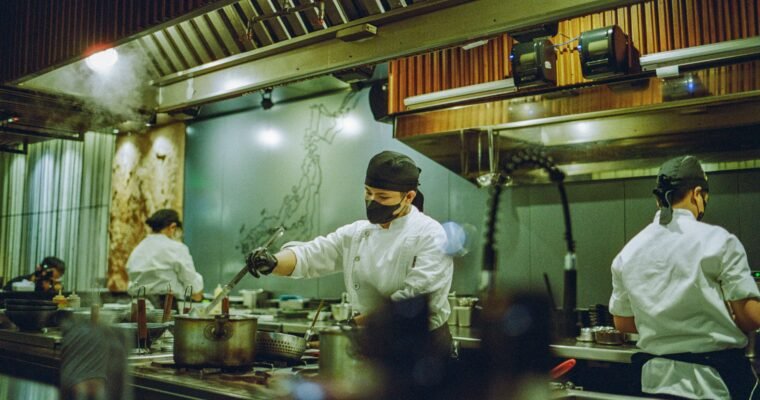
It’s 5:15am in a 5-star hotel pastry kitchen in Bangalore. The Pastry CDP is already three hours in — laminating croissant dough that needs to be in the breakfast oven by 6:30, finishing 200 plated desserts for last night’s late banquet that’s being held over for an early breakfast event, and signing off on the gulab jamun batch the Halwai started at 4am. Two Commis chefs are in. The Pastry Sous won’t arrive until 9. The Executive Pastry Chef is doing the menu review for tomorrow’s wedding. By 8am, this kitchen will have produced 800 individual breakfast pastries, set up two banquet dessert stations, and prepared mise en place for the day’s plated dessert service across three restaurants.
This is what a pastry kitchen actually looks like in an Indian 5-star hotel. None of the “how to become a pastry chef” articles tell you this. They tell you to take a 1-year diploma at their institute. They tell you “creativity and patience are essential.” They show you cake decoration on Instagram.
This guide is different. It walks through the realistic 5-year path from kitchen entry to Pastry Chef de Partie, including the parallel pastry brigade structure that exists in every 5-star Indian hotel, the three career tracks that lead to different lives (hotel pastry, bakery, cloud kitchen pastry), the Halwai-vs-Pastry-Chef decision unique to India, and what monthly salary actually looks like at each rank.
Written from working-kitchen experience leading brigades across Tamil Nadu and international hotel kitchens.
What Does a Pastry Chef Actually Do?
A pastry chef is a culinary professional who specialises in baked goods, plated desserts, breads, and sweet preparations. In Indian 5-star hotels, pastry chefs run a separate kitchen — distinct from the hot line — that operates on its own schedule, with its own brigade, its own equipment, and often its own walk-in storage.
The pastry chef role spans five recognised brigade ranks, from Commis Pastry chef (entry-level, 0–2 years) to Executive Pastry Chef (senior management, 12+ years). It is not a single job — it is a parallel career ladder that runs alongside the main kitchen brigade, with its own progression timeline.
The work breaks into five core areas:
- Plated dessert production for fine-dining restaurants (precision, plating, à la carte)
- Breakfast pastry program (croissants, danishes, muffins — daily volume work)
- Banquet sweet production (large-volume mithai, kheer, halwa, plated dessert at scale)
- Bread program (sourdough, dinner rolls, kulchas, naans in pastry-managed kitchens)
- Chocolate and confectionery work (truffles, chocolate centrepieces, sugar work)
Most pastry chefs specialise in 2–3 of these areas as they progress; only Executive Pastry Chefs need to direct all five.
The Indian Pastry Brigade — Full Ladder
The pastry brigade in Indian 5-star hotels follows a parallel structure to the main kitchen brigade. Movement between ranks takes 1–3 years each, with total time from entry to Executive Pastry Chef typically running 12–15 years.
Commis III Pastry (entry-level, 0–1 year): Equipment cleaning, basic prep, ingredient weighing. Learning the kitchen layout and standard recipes. Often a culinary school internship position.
Commis II Pastry (1–2 years): Production assistance — making basic doughs, simple decorations, batter preparation. Beginning of station-specific specialism.
Commis I Pastry (2–3 years): Independent station operation under supervision. Croissant lamination, bread shaping, basic plating, sugar syrup work. The transition rank — most career decisions get made here.
Demi Chef de Partie Pastry (3–4 years): Assistant to the Pastry CDP. Runs the station independently during off-peak shifts. Responsible for one specific specialism — bread, breakfast pastry, plated dessert, or banquet sweets.
Chef de Partie Pastry (4–7 years): Full station owner. Runs one of the five core areas (plated dessert, breakfast pastry, banquet sweets, bread, or chocolate). Manages 1–2 Commis chefs. This is the rank where pastry careers properly begin paying.
Senior Chef de Partie Pastry (7–10 years): Cross-station experience. Often acts as Pastry Sous Chef during the Sous’s absence. The promotion gateway.
Pastry Sous Chef (10–12 years): Second-in-command of the entire pastry kitchen. Manages all CDPs, handles labour scheduling, signs off on banquet menus, runs cost control for the section.
Pastry Chef (12–15 years): Head of the pastry kitchen. Reports to the Executive Chef. Owns the pastry P&L, designs all dessert menus, hires and trains the brigade.
Executive Pastry Chef (15+ years): Senior management. In multi-property groups, oversees pastry operations across multiple hotels. Strategic role — menu design across outlets, cost benchmarking, vendor relationships.
For the broader career path that connects pastry to the main kitchen brigade and the wider hospitality industry, see the 10-year chef career path guide.
The Three Pastry Career Tracks — Choose Carefully Early
Most pastry chef articles treat “pastry chef” as one career. It’s not. There are three distinct career tracks, with different pay, hours, lifestyle, and progression. Choosing early matters because mid-career switches between them are difficult.
Track 1: Hotel Pastry (5-star and luxury)
The traditional path. Pastry brigade structure, banquet-heavy production, high-volume bread and breakfast programs alongside fine-dining plated desserts.
- Pay: Highest at senior ranks (Executive Pastry Chef ₹1.5–4 lakh/month in luxury hotels). Lowest at entry ranks (Commis ₹14,000–20,000/month).
- Hours: Brutal. 5am starts for breakfast pastry. 60+ hour weeks during banquet season. Two days off in 5-star, one in standalone luxury restaurants.
- Skill development: Comprehensive. You learn breakfast, banquet, plated dessert, bread, chocolate. Cross-trained pastry chefs are rare and valuable.
- Progression speed: Slow. 12–15 years to Executive Pastry Chef. Promotions tied to vacancies in the brigade above you.
- Best for: Chefs who want comprehensive technical mastery and don’t mind 12-year career timelines. The path that produces the most respected pastry chefs.
Track 2: Standalone Bakery / Patisserie
Boutique bakeries (Theobroma, L’Opéra, Whitefield Bakery), patisseries, and specialty cake operations. Faster commercial cycle, smaller team, more direct customer feedback.
- Pay: Mid-range across all levels. Senior bakery managers ₹50,000–90,000/month. Entry-level ₹15,000–22,000/month.
- Hours: More predictable than hotels. 50–55 hour weeks. Often closed Sundays/Mondays.
- Skill development: Narrow but deep. You become very strong in 2–3 specialism areas (e.g., laminated pastry + cakes) but rarely cross-train across all five hotel pastry areas.
- Progression speed: Faster. Skilled bakers can become Head Baker in 5–7 years instead of 10+ in hotels. Some open their own bakery within 7–10 years.
- Best for: Chefs who want commercial skills, faster progression, and the option to start their own business eventually.
Track 3: Cloud Kitchen Pastry
The newest track. Brands like Bakingo, FreshMenu, Smoor, and various cloud-only dessert brands operating through Swiggy and Zomato.
- Pay: Variable. Established brands match bakery pay. New cloud brands sometimes pay higher to attract experienced chefs but have less stability.
- Hours: Different rhythm. Production runs around aggregator order patterns — often midday and evening peaks rather than 5am breakfast starts. 50-hour weeks typical.
- Skill development: Different skill set. SKU management, photography for app listings, packaging design, scaling production for delivery (no plating, but presentation matters in unboxing). Less classical technique.
- Progression speed: Fastest, but in a different direction. Less brigade ladder, more ‘operations manager’ or ‘category head’ roles. Can move to Pastry Operations Lead in 4–6 years.
- Best for: Chefs who want commercial, tech-adjacent careers and aren’t attached to traditional brigade progression. Strongest path for chefs interested in eventually moving into food product development.
Halwai vs Pastry Chef — The India-Specific Decision
In Indian 5-star hotels with major banquet operations, two parallel sweet-production roles exist: Pastry Chef (Western desserts, plated dessert, bread, chocolate) and Halwai (Indian sweets — mithai, kulfi, halwa, traditional banquet sweets). Most online articles ignore this distinction entirely.
Halwai roles focus on Indian regional sweets at scale. Gulab jamun production in 200–500 piece batches. Chenna work for Bengali sweets. Ghee management. Sugar syrup at multiple stages. The work is volume-heavy, technique-specific, and concentrated around wedding banquet seasons. Many Halwai chefs come from family halwai backgrounds or from informal apprenticeships rather than culinary school programs.
Pastry Chef roles focus on Western pastry technique. French laminated dough, Italian gelato, plated fine-dining desserts, chocolate work, bread programs. Most pastry chefs come through formal culinary school education.
Pay comparison: Halwai positions in Tier 1 hotels typically pay slightly less than equivalent Pastry Chef ranks at entry level (Halwai Commis ₹13,000–18,000/month vs Pastry Commis ₹15,000–22,000/month) but converge at senior ranks. Senior Halwai positions in major banquet hotels (Delhi NCR, Hyderabad, Lucknow) can exceed equivalent Pastry CDP pay during peak wedding season because of overtime and event premiums.
Career path: Halwai roles can lead to Banquet Sous Chef (specialising in Indian event production) or to Indian sweets-focused chef roles in regional restaurants. Pastry Chef roles lead through the standard pastry brigade to Executive Pastry Chef.
Which to choose: If you have family halwai background or strong interest in regional Indian sweets, the Halwai track is faster to senior pay because skilled traditional Halwais are increasingly rare. If you have culinary school training and want classical technique exposure, the Pastry Chef track gives broader career mobility, especially internationally.
Education Paths — The Honest Truth About What You Actually Need
Most “how to become a pastry chef” articles will tell you that you need a culinary diploma. That’s because most of those articles are written by culinary schools. Here’s what actually works in Indian hotel hiring:
Path 1: 3-year IHM/hotel management degree. The traditional route. Strong if you want maximum optionality (can pivot between pastry, hot kitchen, F&B service, hotel operations). Cost: ₹2–6 lakh total fees depending on institute. Time: 3 years + internship. Hotel hiring acceptance: Highest.
Path 2: 1–2 year specialised pastry/bakery diploma. Institutes like IICA, IIHCA, NFCI, IBCA, TLSHS. Faster, more focused. Cost: ₹1–4 lakh. Time: 1–2 years. Hotel hiring acceptance: Good for entry-level pastry roles, but you’re competing with IHM graduates for the same Commis positions.
Path 3: Apprenticeship without formal education. Working as a kitchen helper or trainee in a hotel pastry kitchen, learning on the job. Cost: Near-zero (you earn while learning). Time: 1–2 years to Commis rank, slower progression after that. Hotel hiring acceptance: Acceptable for entry roles in standalone bakeries and Tier 2/3 hotels. Tier 1 5-star hotels typically require formal education. This is the path if family circumstances rule out paid education.
Path 4: International culinary school (Le Cordon Bleu, ICCA Dubai, École Lenôtre). The premium route. Cost: ₹15–40 lakh. Time: 1–3 years. Hotel hiring acceptance: Highest at premium properties; opens international career options. Often unnecessary unless targeting global luxury hospitality.
The honest truth: A working chef with 5 years of solid pastry kitchen experience, FoSTaC certification , and a decent portfolio will out-hire a fresh culinary school graduate at the Demi-CDP and CDP levels. Education matters most at entry. Work experience matters most after that.
The Realistic 5-Year Path — Kitchen Entry to Pastry CDP
This is the actual sequence working chefs follow in Indian 5-star hotel pastry kitchens. Faster paths exist for exceptional candidates; slower paths exist for chefs who switch institutes or take career breaks.
Year 0: Education or apprenticeship. Complete an IHM degree, a 1–2 year pastry diploma, or secure a kitchen helper position in a hotel pastry kitchen. Get FoSTaC Basic certification before applying for any 5-star position. If financially possible, target an industrial training (IT) placement at a Taj, ITC, Oberoi, or Marriott property — these placements open hiring conversations later.
Year 1: Commis III Pastry. Entry rank. Cleaning, weighing ingredients, basic prep. Learn the kitchen layout, equipment, and SOPs. Watch the senior chefs constantly. Your first promotion is decided by attitude and presence as much as technique.
Year 2: Commis II Pastry. Production assistance. Start making basic doughs and standard recipes independently. Begin a personal logbook of every recipe you learn — this becomes the most valuable career artefact you’ll have. Identify which of the five pastry areas you’re drawn to (breakfast, plated, banquet, bread, chocolate).
Year 3: Commis I Pastry. Independent station work under supervision. Now you’re running a section during off-peak shifts. This is also the year your hotel decides whether you’re CDP-track or whether you’ll plateau as a long-term Commis. Make yourself indispensable — volunteer for banquet weeks, learn cross-station basics, build relationships with the Pastry Sous Chef.
Year 4: Demi Chef de Partie Pastry. Your first promotion past Commis. You’re now responsible for one specialism — typically the area you’ve trained most in. Pay jumps significantly (often ₹8,000–15,000/month increase from Commis I). Mistakes here matter more — you’re being evaluated for full CDP.
Year 5: Chef de Partie Pastry. Full station owner. Managing 1–2 Commis chefs. This is the rank where pastry chef careers properly begin: solid pay, real responsibility, and the launching point for everything that comes next
For the year-by-year roadmap that extends beyond CDP toward Sous Chef and beyond, see the 10-year chef career path guide.
Pastry Chef Salary in India — Monthly by Rank and City Tier
Monthly figures, not annual. Pastry chef salary in India varies by rank, city tier, and establishment type (5-star hotel vs standalone bakery vs cloud kitchen).
| Pastry Rank | Tier 1 (Mumbai, Delhi, Bangalore, Hyderabad) | Tier 2 (Chennai, Pune, Kolkata, Ahmedabad) | Tier 3 city |
| Commis III Pastry | ₹14,000–20,000 | ₹12,000–17,000 | ₹10,000–15,000 |
| Commis II Pastry | ₹17,000–25,000 | ₹15,000–22,000 | ₹13,000–19,000 |
| Commis I Pastry | ₹22,000–32,000 | ₹19,000–28,000 | ₹16,000–24,000 |
| Demi Chef de Partie Pastry | ₹28,000–42,000 | ₹24,000–36,000 | ₹20,000–32,000 |
| Chef de Partie Pastry | ₹40,000–58,000 | ₹34,000–48,000 | ₹28,000–40,000 |
| Senior Pastry CDP | ₹50,000–72,000 | ₹42,000–60,000 | ₹35,000–50,000 |
| Pastry Sous Chef | ₹70,000–1,20,000 | ₹58,000–95,000 | ₹45,000–75,000 |
| Pastry Chef | ₹1,20,000–2,00,000 | ₹95,000–1,60,000 | ₹70,000–1,20,000 |
| Executive Pastry Chef | ₹2,00,000–4,00,000+ | ₹1,50,000–2,80,000 | ₹1,00,000–1,80,000 |
Track-based pay differences:
- 5-star hotel pastry: Highest at Pastry Sous Chef and above. Lowest at Commis ranks because of the perceived ‘training premium’ of working at a luxury property.
- Standalone bakery: Mid-range across all ranks. Less differentiation between Commis and Demi-CDP than hotels. Top bakery managers can match hotel Pastry Sous pay.
- Cloud kitchen pastry: Variable. Established brands match bakery pay. Operations Lead roles in growing cloud brands can exceed Pastry Sous pay temporarily during scale-up phases.
Additional compensation in 5-star hotels:
- Service charge tip-out (typically ₹3,000–8,000/month, less than hot kitchen because pastry doesn’t get banquet floor tips)
- Staff meals, uniform, laundry
- Provident Fund and gratuity per Indian labour law
- Health insurance (varies by chain)
For full salary context across all kitchen brigade ranks, see the chef salary in India 2026 guide.
What Hotel Pastry Kitchens Actually Look For in Hiring
Indian 5-star hotels run structured hiring for pastry positions. The hiring panel typically includes the Executive Pastry Chef, Pastry Chef, and HR. What they actually evaluate at each stage:
Resume screening criteria. IHM degree or 1–2 year pastry diploma. FoSTaC Basic certification (non-negotiable for any FSSAI-compliant property). Industrial Training (IT) placement at a recognised hotel chain. Portfolio of work — even at Commis level, photos of your school production work or apprenticeship output
Food trial — the actual gate. Most hotels run a 2–4 hour food trial for pastry positions. Common items requested: a laminated viennoiserie (croissant or danish), a plated dessert with at least three components, a tempered chocolate decoration, a basic bread (focaccia or dinner rolls). The trial isn’t just about taste — it’s about kitchen behaviour. Cleanliness, station organisation, ingredient handling, and time management are evaluated.
Trial behaviours that fail candidates:
- Wasting ingredients during the trial (signals poor cost discipline)
- Asking too many basic questions instead of working it out
- Leaving the station messy at the end
- Not labelling what you’ve made before service evaluation
Named hotel context
- Taj Group: Strong preference for IHM graduates. Highly structured pastry training program. Slowest progression but highest training quality. Pastry CDPs at Taj properties typically have 5–7 years of Taj-internal experience.
- ITC: Strong banquet pastry program. Often hires Halwai chefs alongside Pastry chefs in major banquet properties. Pay competitive at senior ranks.
- Oberoi: Premium positioning. Most selective hiring. Pastry Sous and above typically require international experience.
- Marriott / Hyatt / Hilton: Standardised hiring across properties. Faster progression possible because of multi-property promotion paths. Often hires from specialty pastry diplomas (IIHCA, IICA) more readily than other groups.
Opening Your Own Bakery — The Economic Reality
This section requires a different reviewer than Chef Anandhan — bakery startup economics is a specialised area. Figures below are general industry ranges; an experienced bakery operator should validate before publish.
A boutique bakery in a Tier 1 Indian city typically requires ₹15–40 lakh in startup capex covering: commercial oven and bakery equipment (₹6–12 lakh), shop fit-out and refrigeration (₹4–10 lakh), 12-month deposit and rent reserve (₹3–8 lakh), initial inventory and packaging (₹1–3 lakh), licensing and FSSAI compliance (₹50,000–1.5 lakh), marketing launch budget (₹1–3 lakh), and contingency (₹2–5 lakh).
Monthly operating costs for a small boutique bakery typically run ₹3–7 lakh covering rent, staff (Head Baker plus 2–3 assistants), ingredients, packaging, electricity, and aggregator commissions on online sales.
Breakeven typically takes 12–24 months for well-run boutique bakeries in Tier 1 cities. Many bakeries fail in months 6–9 — the period when launch buzz fades but operating costs remain. Conservative planning includes 18 months of operating cost reserves separate from capex.
Three career paths within bakery ownership:
- Single boutique location: Best for chefs prioritising quality of life over scale. Owner-operated. Full creative control.
- Multi-location chain: Requires investor capital. Owner becomes operations manager rather than baker.
- Cloud-only pastry brand: Lower capex (₹6–12 lakh), but commission cost from Swiggy and Zomato (15–30%) compresses margins significantly.
For chefs considering this path: spend at least 2 years as a Bakery Head Baker or Pastry CDP before opening your own. The technical skill is the easy part; managing a P&L, vendor relationships, and a small team is what separates successful bakery owners from chefs who lost their savings.
Frequently Asked Questions
How many years does it take to become a pastry chef in India?
Becoming a Chef de Partie Pastry typically takes 4–6 years total experience — 0–1 year of education or apprenticeship, then 4–5 years of progression through Commis III, Commis II, Commis I, and Demi-CDP before reaching full Pastry CDP. Reaching Executive Pastry Chef takes 12–15 years total.
What is the salary of a pastry chef in India?
Monthly figures vary by rank: Commis Pastry chefs earn ₹14,000–25,000/month, Pastry Chef de Partie ₹40,000–58,000/month in Tier 1 cities, Pastry Sous Chef ₹70,000–1,20,000/month, and Executive Pastry Chef ₹2,00,000–4,00,000+/month in 5-star hotels. Standalone bakeries pay similarly at senior ranks but slightly less at entry levels.
Do you need a degree to become a pastry chef in India?
No, but it helps significantly. A 3-year IHM degree or 1–2 year pastry diploma improves entry-level hiring at 5-star hotels. Apprenticeship paths exist (working as a kitchen helper and progressing through experience), but Tier 1 5-star hotels typically require formal education for Commis positions. FoSTaC Basic certification is mandatory regardless of education path.
What is the difference between a baker and a pastry chef?
A baker primarily produces breads, breakfast pastries, and basic baked goods. A pastry chef has a broader specialism that includes plated desserts, chocolate work, sugar work, banquet sweets, and bread. In Indian 5-star hotels, the Pastry Chef rank manages all baking and dessert operations including any dedicated bakers in the kitchen.
Which is the best pastry chef course in India?
There’s no single ‘best’ — it depends on your goals. IHM colleges (IHM Pusa, IHM Mumbai, IHM Bangalore) give broadest hospitality education. Specialised pastry institutes like IICA, IIHCA, NFCI, IBCA, and TLSHS offer faster pastry-specific training. International programs (Le Cordon Bleu, ICCA Dubai) cost significantly more but open international career options. Match the course to whether you want general hospitality optionality or specialised pastry-only training.
Can I become a pastry chef without going to culinary school?
Yes, through apprenticeship — working as a kitchen helper or trainee in a hotel pastry kitchen, learning on the job. This path works for entry into standalone bakeries and Tier 2/3 hotels. Tier 1 5-star hotels typically require formal education. The apprenticeship path is slower to senior ranks but eliminates education debt.
Conclusion
Becoming a pastry chef in India is not a one-year diploma decision. It’s a 12–15 year career that runs through a parallel brigade structure most online articles don’t even acknowledge. The chefs who make it to Executive Pastry Chef aren’t the ones who took the most expensive course or the longest internship. They’re the ones who chose a career track early (hotel, bakery, or cloud kitchen), built a personal recipe logbook from year 1, took the unglamorous Commis years seriously, and treated cross-station experience as a strategic priority once they hit Demi-CDP.
For working chefs at the start of this path: pick your track. Get FoSTaC certified before your first hotel application. Volunteer for banquet weeks during your Commis years. Build a portfolio of your own work — even if you’re a Commis II making basic doughs, photograph everything. The portfolio you build between Commis II and Pastry CDP becomes the difference between getting promoted within your current hotel and being able to negotiate a better position elsewhere when promotion stalls.
To track your pastry kitchen’s recipe costs, yields, and food cost percentages — useful from CDP onwards when you start owning station P&L — the recipe cost calculator is built specifically for Indian kitchen operations.

Leave a Reply